
CASE WATER SYSTEMS · ASHEVILLE · BUNCOMBE COUNTY
Well Water Filtration in Asheville, NC
Well water in Asheville, Candler and Leicester may need different treatment depending on tested water quality. Sediment, iron staining, sulfur odors and acidity call for different approaches; no single filter solves every issue.
Start with water testing
Water chemistry and flow conditions guide equipment choices. An odor alone cannot establish whether sulfur compounds or another cause are present.
Treatment matched to the concern
Options may include sediment filtration, iron treatment, pH neutralization and UV disinfection when testing and site conditions support them.
Installation and upkeep
Filter sizing, pressure loss, installation space and maintenance requirements should be considered before recommending equipment.
Quick Answer: Well Water Filtration in Asheville, NC
Improve Asheville well water with professional filtration. Sediment, iron, sulfur and pH treatment systems selected for your water needs.
- Serving Asheville and nearby Buncombe County communities.
- Based in Candler, NC. Licensed NC well contractor (#4689-C).
- Certified Water Treatment Installer. We recommend water testing before choosing equipment.
Related pages: All water system services in Buncombe County • Well water filtration across Western NC • Well Pump Repair in Buncombe County, NC • Well Inspections Buncombe NC • Emergency Well Pump Repair in Asheville, NC • Septic Alarm Repair in Asheville, NC
Call (828) 222-4160 (24/7 for no-water emergencies) or request service online.
What Buncombe County well water commonly involves
Research on private wells in Buncombe County has found iron and manganese above federal secondary guidelines in some areas, with levels tied to the underlying bedrock. Across the Blue Ridge, acidic (low-pH) groundwater is also a recognized issue. Heavy rain can bring sediment or cloudiness to some wells and springs. Groundwater in much of the region tends to be soft, but some wells still benefit from softening. That variety is why we start every filtration recommendation with a test, not a symptom.
Low pH and your plumbing
Acidic water can slowly corrode copper pipes and fixtures. Signs include blue-green stains in sinks and tubs, a metallic taste, and eventually pinhole leaks in copper lines. A pH neutralizer, often a calcite filter, raises the pH as water passes through. Because calcite adds some hardness, we consider the whole treatment train when planning one.
How a multi-stage system fits together
When more than one concern is present, stages are arranged so each protects the next. A typical sequence starts with sediment filtration, followed by iron, sulfur or pH treatment, then softening if testing calls for it, with UV disinfection placed last before water enters household plumbing. Not every home needs every stage; the right combination depends on your results and demand.
Test First, Then Treat
Before recommending any equipment, we start with a water test. Symptoms tell you something is wrong; a test tells you what it is and how much is there, so the system is sized for your water and you do not pay for stages you do not need. Schedule well water testing, or pair it with a full well inspection or our inspections and testing service if you are buying a home or have not had the well checked recently.
Common Well Water Problems in Asheville
Smell: Rotten Eggs or Sulfur
A rotten-egg odor is often linked to hydrogen sulfide, but it can also come from a water heater. Noting whether the smell is on hot, cold or both taps helps narrow the cause before treatment is chosen.
Staining: Orange, Brown, Black or Blue-Green
Orange and brown stains on fixtures and laundry usually point to iron, and black stains to manganese. Blue-green stains or a metallic taste often signal low-pH water that is corroding copper plumbing.
Hardness: Scale and Spotting
Groundwater in much of the region tends to be soft, but some wells still carry enough hardness to leave scale on fixtures and spots on glassware. Testing shows whether softening is worth adding.
Iron: Rusty Water and Clogged Fixtures
Iron above secondary guidelines has been found in some Buncombe County wells. Beyond staining, it can build up in fixtures and appliances. Iron treatment is sized to the levels the test reports.
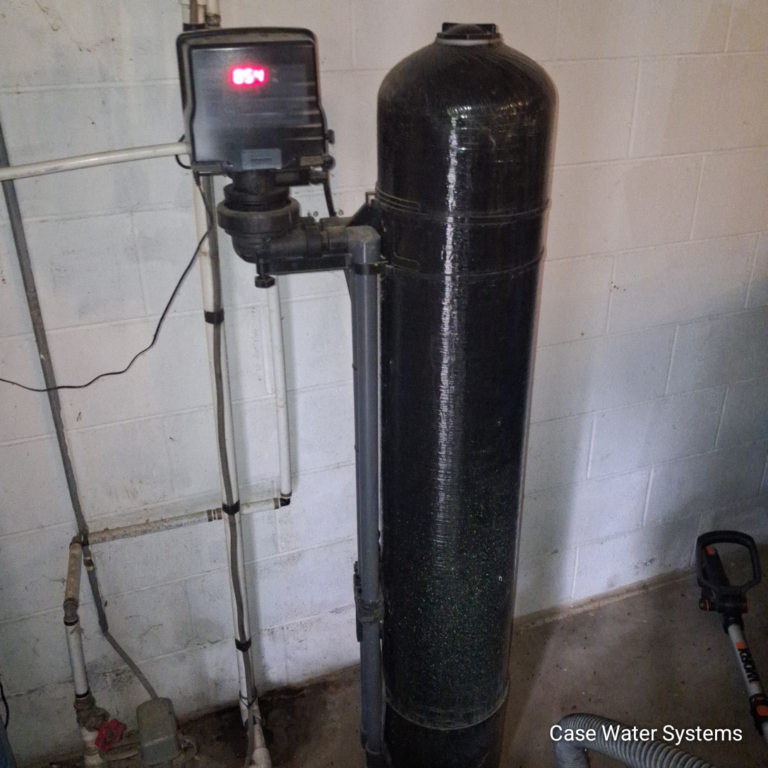
Sediment: Cloudy or Gritty Water
Heavy rain can bring sediment or cloudiness to some wells and springs. Cloudy water or filters that clog quickly, especially after storms, often call for sediment filtration ahead of other treatment stages.
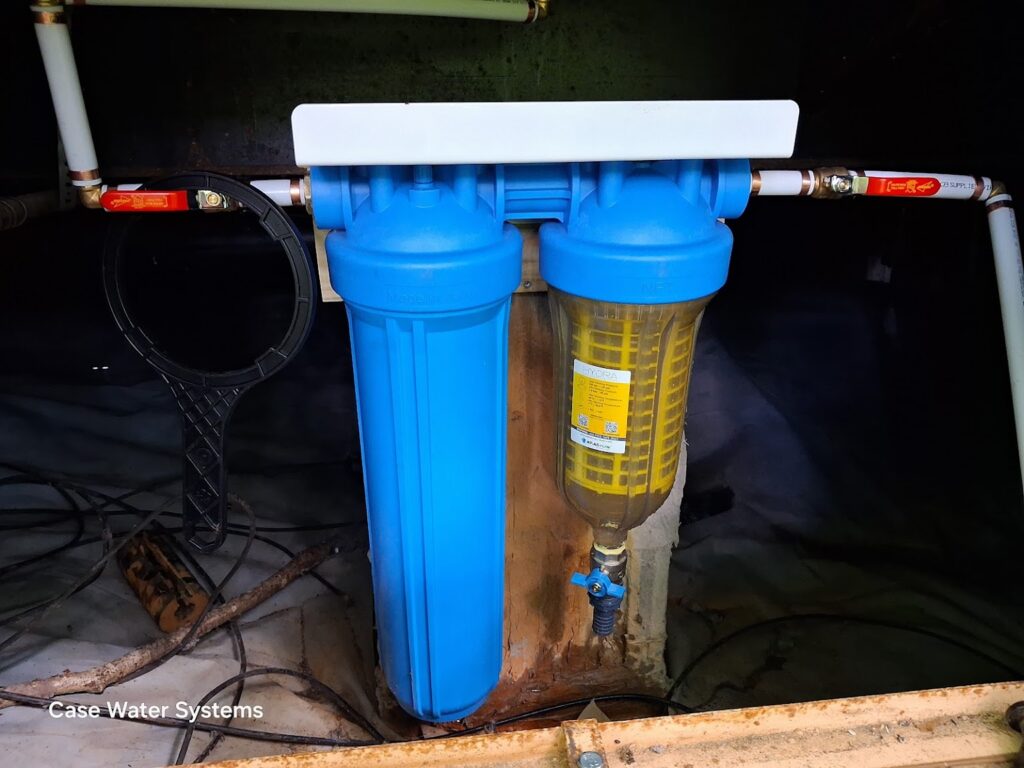
Bacteria: A Positive Test Result
Bacteria cannot be seen, smelled or tasted, so a test is the only way to know. A positive result, or no recent test at all, is a reason to check the well and discuss disinfection. UV treatment may be recommended when testing and site conditions support it.
What we review on the visit
We review your water-test results, household demand and existing equipment, then discuss available space, plumbing connections, service access and maintenance before selecting equipment. Case Water Systems is a Certified Water Treatment Installer and services existing systems as well as new installations. Explore well water filtration and treatment, schedule water testing, book a well inspection, or request service.
Neighborhoods and communities we serve
We work with private well owners in and around Asheville, Candler, Enka, Leicester, Weaverville, Fairview, Arden, Swannanoa, Black Mountain, Alexander and Barnardsville, plus other Buncombe County communities. Availability is confirmed for each property.
Frequently Asked Questions
What is the difference between a whole-house system and a faucet filter?
A point-of-entry system treats all the water entering the home, protecting plumbing and appliances. A faucet or pitcher filter treats only the water that passes through it.
Should I test my water before buying a filter?
Yes. Smell, staining and cloudiness can point toward a problem, but they cannot tell you its cause or concentration. A water test shows what is actually present so the treatment can be matched and sized to it.
Can a filter fix a rotten-egg smell?
Often, once the cause is known. The odor can come from the well water itself or from a water heater, so we check whether it appears on hot, cold or both taps and review test results before recommending treatment.
What causes orange, brown or black stains?
Orange and brown stains usually point to iron, and black stains to manganese. Both are found in some Buncombe County wells. Testing confirms the levels so iron treatment can be sized correctly.
What should I do if my well tests positive for bacteria?
Do not drink the water untreated until the issue is addressed. Disinfection and a retest are typical first steps, along with an inspection of the well cap, casing and surrounding area to find how contamination is getting in. UV disinfection may be recommended when testing and site conditions support it.
Should I retest my well after a flood?
Yes. North Carolina health officials recommend testing well water after flooding and after repairs to well components.
How much maintenance does filtration need?
It depends on the equipment. Service can include filter changes, media renewal, control-valve checks and UV lamp replacement.
Serving Asheville from Candler, NC
Case Water Systems is based in Candler, NC, and serves Asheville and the rest of Buncombe County. Learn more about our well water treatment, see our Buncombe County service page, or read customer reviews. For no water from your well, call (828) 222-4160 — 24/7.
Private well filtration for Asheville homes
Case Water Systems provides well and spring water treatment services across Western North Carolina. Appropriate solutions depend on testing and site conditions.