
Septic Systems
Septic installation on steep lots in Western NC
Putting in a septic system on a steep mountain lot is not like putting one in on flat farmland. The slope, the soil and the rock underneath decide where a system can go, and on some lots there is only one spot that works. The county health department has to sign off before anyone digs.
It starts with the soil, then the permit
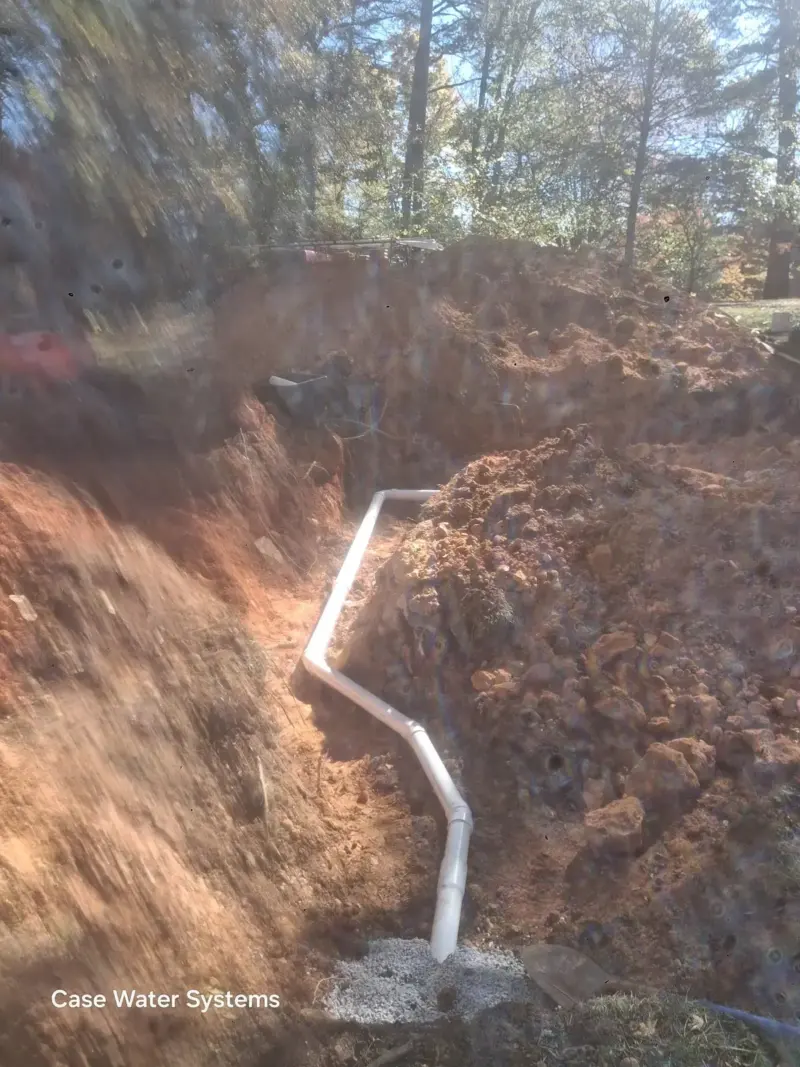
North Carolina requires a soil and site evaluation before a new or relocated system can be permitted. The evaluator digs test pits or bores holes and looks at soil depth, texture, signs of wetness, and how far down rock is. They also look at slope and landscape position. That evaluation decides whether the site can be used at all, and what kind of system it needs. A lot that looks fine on the surface can turn out to have rock two feet down.
If the site works, the health department issues an improvement permit, then a construction authorization that spells out the system type, size and location. The homeowner usually pulls those permits. We build to that authorization. Changing the layout in the field without approval can mean tearing it out and redoing it. If something in the ground does not match what was expected, the county gets a call before we change anything.
Questions to ask before a steep-lot install
- Has the county done the soil and site evaluation, and what did the permit approve?
- Will the system need a pump tank to reach the field?
- How will equipment get to the site, and how will the slope be restored?
- Where do the well, the field and the setbacks fall on the lot?
- Will the tank get risers so it can be reached later?
What the mountains change about the job
On a hillside, the drain lines usually run along the contour, level across the slope, so effluent spreads evenly instead of rushing to the low end. Sometimes the best soil is uphill from the house, and the system needs a pump tank to push effluent up to it. See septic pump repair. Parts of the Cashiers plateau, the Black Mountains and the Spruce Pine area have thin soil over rock. Where there is not enough soil depth for a conventional trench, the permit may call for a different design, and the usable area can be small.
Red clay takes water in slowly, so fields need enough room and careful siting. Creeks, coves and property lines all have setbacks. Equipment access matters too: a tight driveway, a sharp drop or a wooded bench can limit what we can get in and how we restore the site.
Need your tank pumped? Book it with us and we’ll set it up with a trusted local partner. A failing field on a steep lot still has to be repaired to today’s permit, and there may not be much room for a new one. See septic installation and signs a drain field is failing.
Questions we get about this
Who pulls the septic permit on a steep lot?
The homeowner usually applies for the permit with the county health department. We can help you understand what the application needs and then install to the approved design. We do not pull the permit in the owner’s name.
Can a septic system be installed on a steep mountain lot?
Often yes, if the soil and site evaluation finds a usable area. Slope, shallow rock, wet ground and setbacks all limit where a field can go. On some lots there is only one workable spot, and on some lots a conventional trench is not possible.
Why do some steep lots need a pump tank?
The best soil is sometimes uphill from the house. A pump tank moves effluent up to that field. That adds a pump, floats, a control panel and an alarm, all of which need to be serviced later.
Do you pump the existing tank?
Need your tank pumped? Book it with us and we’ll set it up with a trusted local partner.
What if the lot already has a failing field?
A repair or replacement still has to meet today’s county permit. There may not be much room for a new field on a rocky or steep lot, which is why we look carefully at what can be saved and what the county will allow.
Need a septic system on a steep lot?
Share the property address and whether this is a new install or a repair. We’ll call or text to confirm a time. Call (828) 222-4160 if you have a failing system.